Data
Your enterprise data, unified.
Ingest and organize data from across your enterprise into a structured, governed foundation for intelligent systems.




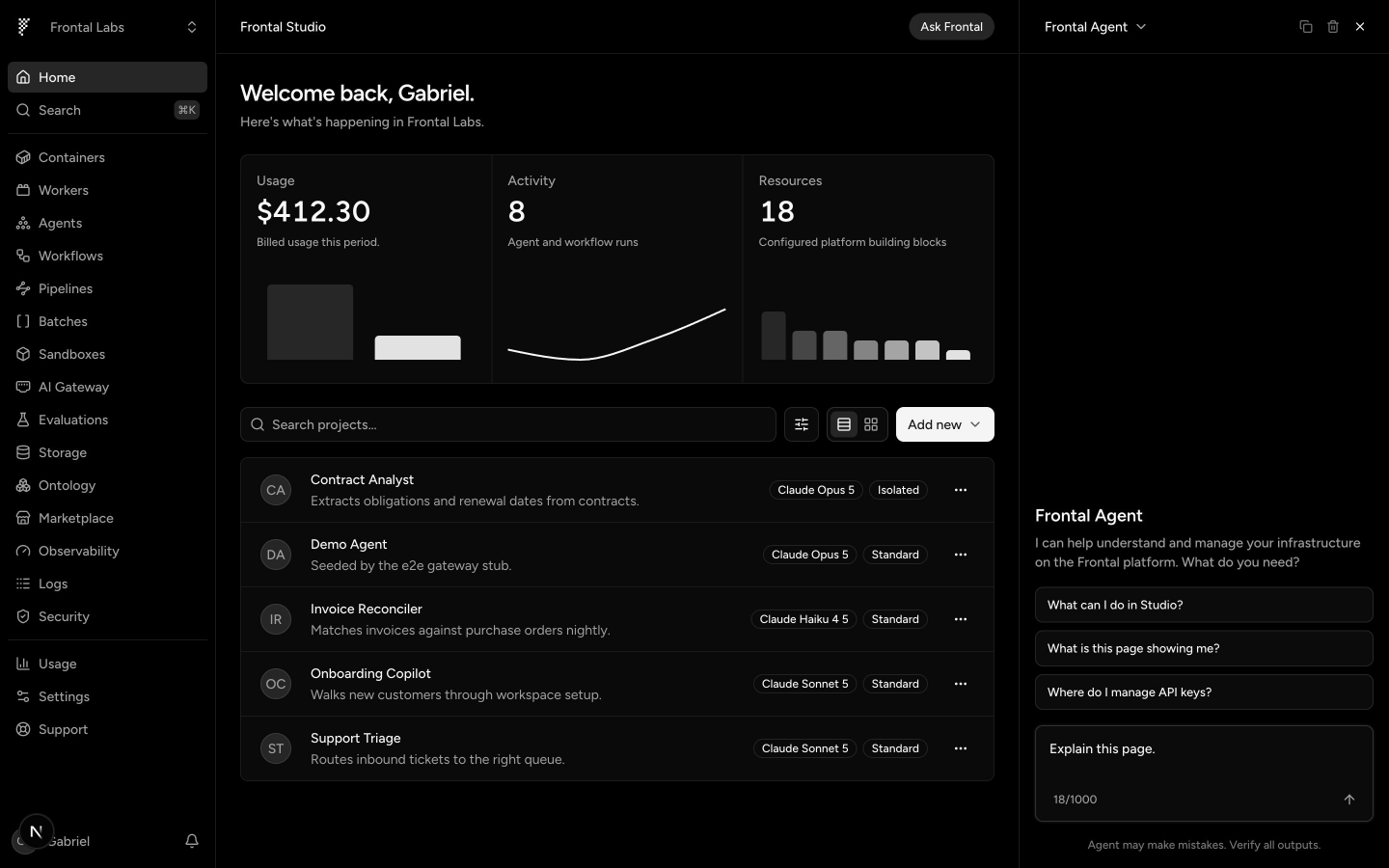
From source system to resolved record
Records arrive from connectors or are read in place from your warehouse, then resolve against your ontology into entities you can act on.
What unified data makes possible
What changes when every system agrees on what a customer is.
Managed connectors
Sync records from the systems you already run, continuously and incrementally.
Warehouse-native
Read from your warehouse in place, without copying data you have already modelled.
Schema and lineage
Every field's type, source, and last sync are tracked and queryable.
Entity resolution
Records describing the same thing are matched and merged against your ontology.
Quality checks
Validation runs on every sync, so bad records surface before an agent ever reads them.
Governed at the source
Each source inherits the permissions of the entities it feeds, rather than a second copy of the rules.
What the data layer supports
- Sources
- Managed connectors, your warehouse, object storage, and the API.
- Sync modes
- Full refresh, incremental, and change-data-capture where the source supports it.
- Freshness
- Per-source schedules down to minutes, with backfill on demand.
- Formats
- Structured records, JSON, CSV, Parquet, and unstructured documents.
- Lineage
- Field-level source, transform, and last-sync timestamp.
- Volume
- Millions of records per source, with per-source rate limits you control.
Before you connect a system
What data teams ask before pointing a source at Frontal.
Connect your first source
Start with one system. Add the rest once you can see it resolving.